




















Newer
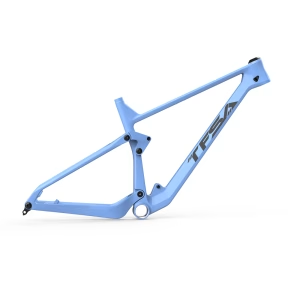
How to Customize Rear Shock Compatibility for a Carbon Full Suspension MTB Frame?
Carbon fiber grade influences frame stiffness, weight, and mechanical performance. However, material selection should consider the intended riding application rather than grade alone.
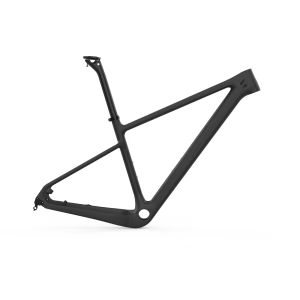
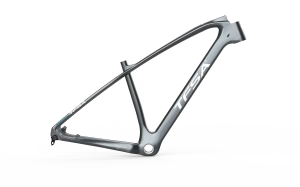
For example, TFSA uses T800 carbon fiber in its JH08 hardtail frame and incorporates T1000 reinforcement in the JH22 model. These configurations provide practical references when discussing material options with a manufacturer.
Before ordering, brands should confirm:
The JH08 carbon hardtail frame provides a product reference for evaluating T800 material and frame specifications.

Prepreg quality affects resin distribution, fiber consistency, and the repeatability of the finished frame. Buyers should confirm material storage conditions, batch traceability, and inspection procedures.
For custom projects, the manufacturer should also review the proposed layup schedule. Fiber orientation and layer distribution need to reflect the expected loads around the head tube, bottom bracket, and rear triangle. The final design should be confirmed through engineering evaluation rather than arbitrary layer counts.
The molding process influences internal surface quality and structural consistency. Air bladder molding and EPS molding are used to consolidate carbon layers during frame manufacturing.
Brands should ask how the selected process controls internal wrinkles, wall consistency, and material distribution. These details are important when evaluating manufacturing repeatability across different production batches.
A 29er frame requires a complete geometry specification for every intended size. Wheel diameter alone does not determine frame fit or handling characteristics.
The technical drawing should identify:
Brands should confirm these measurements against their target riding category and intended component configuration.
Maximum tire clearance must be evaluated using the actual tire and rim combination. Nominal tire width may differ from its installed dimensions depending on rim width and tire construction.
Buyers should specify the maximum tire width and required clearance around the fork, seatstays, and chainstays. Mud clearance should also be considered for off road applications.
Component interfaces must be documented before sample production. Incompatible dimensions can cause installation problems and require costly frame modifications.
The following specifications should be included in the technical drawing.
| Component Interface | Specification to Confirm | Purchasing Consideration |
| Bottom bracket | BSA 68mm or PF30 | Match the crankset and bearing system |
| Rear axle | 135 × 9mm QR or 142 × 12mm thru axle | Match the rear hub and dropout design |
| Cable routing | Internal routing configuration | Confirm cable and hose paths |
| Wheel clearance | 29er wheel and maximum tire width | Check installed tire clearance |
The JH22 carbon MTB frame lists PF30 in its specification table. Its product description also mentions BSA 68mm, so buyers should confirm the exact bottom bracket configuration before approving a design. Rear axle compatibility should likewise be verified against the selected product version.

Structural inspection helps identify visible manufacturing defects before shipment. Buyers should establish inspection procedures for the frame body, bonded areas, and critical structural sections.
The purchase agreement should define the inspection method, acceptance criteria, and required documentation. Any additional structural testing should be agreed upon according to the intended application and applicable standards.
Dimensional accuracy directly affects component installation and bicycle assembly. Inspection should cover:
The manufacturer and buyer should agree on acceptable tolerances before production. This prevents disagreements when finished frames are evaluated against the original drawings.
A physical sample should be inspected before mass production. Brands should check geometry, component compatibility, surface finish, and workmanship against the approved specifications.
The signed sample and technical drawing should serve as production references. Any changes to materials, geometry, or finishing should require written approval.
For OEM projects, carbon bike frame production and inspection should follow documented quality procedures, including dimensional checks and pre shipment assembly testing.

Custom frame development starts with a technical brief covering wheel size, frame geometry, component standards, materials, and intended application.
Before sample production, the manufacturer should review design feasibility and component compatibility. Brands should confirm:
Frame dimensions and geometry.
Component compatibility.
Material and structural requirements.
Surface finish and branding details.
Paint requirements should be documented separately to ensure consistent production. Key details include:
Pantone colors or physical color samples.
Logo size and placement.
Matte or glossy finish.
Graphic and decal positioning.
Protective coating requirements.
A physical sample helps confirm color accuracy before mass production.
The production schedule should cover both sample development and mass manufacturing. Mold preparation, design revisions, material availability, and order quantity may affect lead times.
Brands should confirm sample approval deadlines, production dates, delivery batches, inspection procedures, and shipping arrangements before placing an order.
Clear specifications, approved samples, and defined inspection criteria help reduce production risks and maintain consistent frame quality. Contact TFSA to discuss your custom 29er carbon MTB frame requirements and request an OEM quotation.


