




















Newer
How to Customize a Carbon Hardtail MTB Frame for Different Wheel and Drivetrain Standards?
Customizing rear shock compatibility for a carbon full suspension MTB frame requires matching shock dimensions, suspension characteristics, and frame clearance. These factors help bicycle brands select suitable components and avoid fitment problems during frame development.
Eye to eye length measures the distance between the centers of the shock mounting points when fully extended. It determines whether the shock fits the frame’s intended suspension geometry. An incorrect length can affect the suspension position and overall frame geometry.
Shock stroke refers to the distance the shock shaft travels during compression. An excessive stroke may allow the linkage to move beyond its intended range, while a shorter stroke can limit suspension movement.
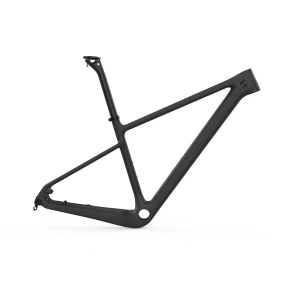
For example, the Carbon Full Suspension MTB Frame JH-51 specifies a shock length of 190 mm × 22 mm and a 50 mm stroke. These dimensions provide a reference for shock selection. The exact mounting interface should be confirmed with the manufacturer before ordering.
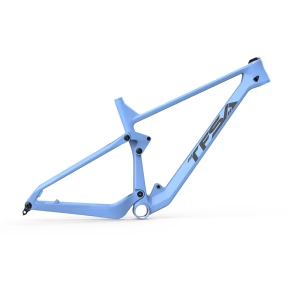
Mounting hardware connects the shock to the frame and linkage. Compatibility depends on mounting width, bolt diameter, sleeve dimensions, and eyelet configuration. These specifications should match the frame to prevent unwanted movement or binding during suspension operation.
The leverage ratio describes the relationship between rear wheel movement and shock compression. A progressive leverage curve generally increases resistance toward the end of suspension travel, while a linear curve produces a different response.
The shock should suit the frame’s leverage characteristics and intended rear wheel travel to provide appropriate support throughout compression. More details about suspension geometry and linkage design can help explain this relationship.

Air and coil shocks offer different spring characteristics. Air shocks use compressed air and allow adjustments through pressure and volume spacers. Coil shocks use metal springs and generally provide a more linear response.
The choice depends on the frame’s leverage curve, riding application, and desired suspension feel. Both types must also meet the frame’s dimensional and mounting requirements.
The shock body must remain clear of surrounding carbon tubes and linkage components throughout suspension movement. Larger air cans and external reservoirs may require additional space, particularly in compact frame designs.
Check the shock’s mounting orientation and inspect nearby frame surfaces for potential contact.
A full compression inspection helps identify interference that may not be visible when the suspension is extended. Follow the shock manufacturer’s recommended procedure, using appropriate depressurization or spring removal when necessary.
During testing, verify that the linkage moves freely, the shock does not contact the frame, and the rear tire maintains sufficient clearance. Resolve any interference before riding.
Frame geometry and shock placement should be considered together during initial development. Confirm the intended riding application, rear wheel travel, linkage layout, and available component clearance before finalizing the design.
Document the required eye to eye length, stroke, mounting hardware, shock type, and reservoir configuration. Manufacturers offering custom carbon fiber frame services can evaluate these requirements during the design stage.

Assemble the prototype with the intended shock and mounting hardware. Check mounting alignment, suspension movement, and frame clearance throughout the compression range.
Before mass production, inspect mounting dimensions, carbon frame condition, and assembly consistency against the approved specifications.
An excessive stroke can allow the linkage to move beyond its intended range, potentially causing the rear wheel or shock components to contact the frame. Always follow the frame manufacturer’s approved stroke specification.
Yes, provided their dimensions, mounting interfaces, and body configurations meet the frame’s requirements. Matching eye to eye length alone does not guarantee compatibility.
Air shocks offer adjustable spring progression, while coil shocks generally provide a more linear spring response. The choice should match the frame’s leverage curve, intended application, and clearance requirements.
Rear shock compatibility depends on accurate dimensions, suitable suspension characteristics, and sufficient frame clearance. Confirming these factors during design and prototype testing helps prevent fitment problems. For custom frame development, contact the engineering team.


