




















Newer
Custom Carbon Pickleball Paddles: Materials, Design, and Manufacturing
Customizing a carbon hardtail MTB frame requires selecting compatible wheel, axle, and drivetrain standards. This guide covers the key specifications to consider when developing a frame for different component configurations.
Rear axle spacing determines which rear hub and wheelset fit a frame. The two standards differ in axle design and installation method.
| Specification | 135 × 9 mm QR | 142 × 12 mm Thru Axle |
| Axle type | Quick release | Thru axle |
| Axle diameter | 9 mm | 12 mm |
| Hub spacing | 135 mm | 142 mm |
| Installation | Quick release mechanism | Thru axle |
| Main consideration | Compatibility with traditional QR hubs | Compatibility with 12 mm thru axle hubs |
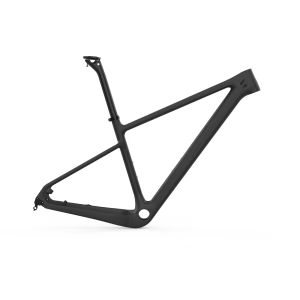
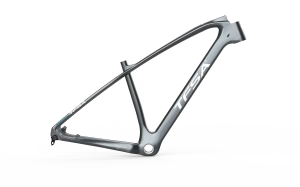
For buyers who need both configurations, TFSA’s Carbon Hardtail MTB Frame JH-08 provides a specific example. Its replaceable rear dropout design supports both 135 × 9 mm QR and 142 × 12 mm thru axle wheelsets, allowing the same frame model to accommodate either configuration.

Rear dropout design affects axle installation and derailleur positioning. Before confirming a custom frame, buyers should check the dropout dimensions, mounting positions, and compatibility with the selected rear hub and derailleur hanger.
Wheel diameter affects frame geometry, fork compatibility, and tire clearance. A 29 inch wheel has a larger overall diameter than a 27.5 inch wheel, while wider tires require additional space around the chainstays and seatstays.
TFSA’s JH-08, JH-22, and JH-26 specifications identify 29er configurations. Projects requiring 27.5 inch wheels or wider tires should have their geometry and clearance confirmed during customization.
BSA uses a threaded bottom bracket interface, while PF30 uses a press fit system. Their installation methods and frame shell designs are different.
| Specification | BSA | PF30 |
| Interface | Threaded | Press fit |
| Installation | Bearings or cups are threaded into the shell | Compatible cups or bearings are pressed into the shell |
| Frame requirement | Threaded bottom bracket shell | Press fit bottom bracket shell |
| Main consideration | Thread and crankset compatibility | Shell dimensions and bearing fit |
The choice depends on component availability, maintenance preferences, and the requirements of the intended market. Buyers should confirm the bottom bracket standard and shell width before approving the frame design.
Chainline depends on crankset design, chainring position, rear hub spacing, and cassette configuration. Incorrect combinations can affect shifting performance or cause chainring contact with the chainstay.
Before production, confirm crank spindle dimensions, chainline requirements, and chainring clearance.
Accurate bottom bracket dimensions are essential for proper bearing installation. Incorrect tolerances or alignment can cause installation difficulties, movement, and unwanted noise.
Manufacturers should control the bottom bracket area’s dimensions during molding and finishing to maintain consistent component fit.
The rear derailleur hanger connects the derailleur to the frame. Different hanger designs use different mounting interfaces, so the selected standard must match the intended drivetrain.
Universal Derailleur Hanger (UDH) provides a standardized mounting interface and improves replacement options. However, UDH compatibility alone does not guarantee compatibility with every drivetrain or rear hub configuration.
The Carbon UDH Hardtail MTB Frame JH-26 uses a UDH rear hanger. Its official specifications include T800 and T1000 carbon fiber, a BSA 73 mm bottom bracket, internal cable routing, and a frame weight of 900 g for size S.

Cassette size, chainring position, rear hub spacing, and chainline all influence drivetrain compatibility. These dimensions should be checked together to prevent component interference and shifting problems.
Buyers should confirm the derailleur mounting interface, cassette clearance, crankset dimensions, and rear hub configuration before finalizing the frame design.
Mechanical drivetrains use shift cables and housing, while wired electronic systems may require dedicated wire passages. Wireless electronic shifting generally requires fewer frame routing provisions.
Mountain bike frames may also need separate routing for the rear brake hose and dropper seatpost. Buyers should confirm cable entry and exit positions, internal guides, protective grommets, and maintenance access.
Properly positioned guides and protective sleeves help prevent cables from contacting carbon frame walls and creating noise during riding.
Before production, prepare a specification sheet covering:
These details give manufacturers a clear basis for evaluating the proposed design.
Frame geometry should match the intended wheel and component configuration. Important dimensions include head tube angle, seat tube angle, chainstay length, bottom bracket height, reach, and stack.
Sample production allows buyers to evaluate component fit, frame dimensions, and surface finish before approving larger orders.
TFSA’s Carbon Frame Customization service covers requirement discussion, geometry confirmation, sample production, mass production, and delivery. Its website also lists low MOQ support starting from one unit.

Buyers should confirm inspection procedures for frame geometry, bottom bracket dimensions, rear dropout alignment, and carbon surface finish. Relevant structural testing and quality documentation should also be agreed upon before production.
The right frame configuration starts with clearly defined wheel and drivetrain requirements. For a custom carbon hardtail MTB project, contact the TFSA team to discuss your specifications.


