




















Newer
What Makes a High-Quality MTB Full Suspension Carbon Frame
A carbon frame road bike can be developed around different riding requirements rather than one fixed specification. The intended use determines which frame characteristics need the most attention, while material selection and structural design turn those requirements into a practical frame.
Understanding this process helps explain why two road bikes using carbon fiber can have very different frame specifications.
Racing applications place greater emphasis on aerodynamic design, stiffness, weight, and efficient power transfer.
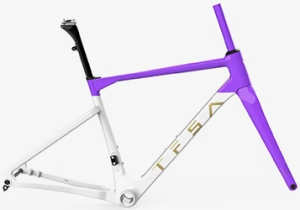
The JH 10 is designed as a carbon aero road frame for racing and competitive cycling. It uses T800 carbon fiber with T1000 reinforcement in key areas and has a listed frame weight of 950 g.
The frame also features full internal wiring, a T47 threaded bottom bracket with a 46 mm diameter and 86 mm shell length, and disc brakes. It supports 700C tires in 23C, 25C, 28C, and 30C sizes.
These specifications provide an example of how a frame can be configured around performance focused road riding.

Endurance applications require a different frame setup. The focus is on creating a specification that suits longer road rides and the rider’s preferred equipment configuration.
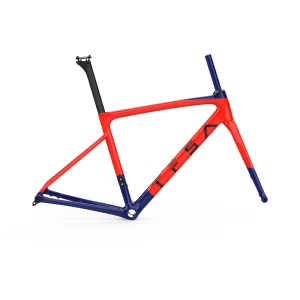
The JH 15 is listed as a carbon endurance road frame. It uses T800 carbon fiber and has a listed frame weight of 800 g. Its specifications include disc brakes, full internal wiring, and 700C tire compatibility from 23C to 30C.
For a custom project, an existing frame platform can provide a practical reference when defining the required specifications.
Weight becomes a more important consideration when climbing and acceleration are key requirements.
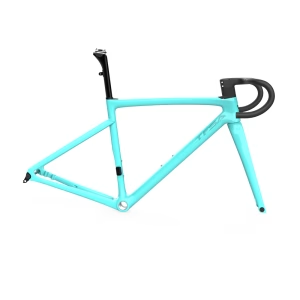
The JH 35 is listed as a lightweight carbon road frame with an unpainted frame weight of 680 g for the 49 cm size. Its specifications include T800, T1000, and T1100 carbon materials, full internal routing, disc brakes, and 700C tire compatibility from 23C to 30C.
The product page also states that the frame has passed SGS testing standards and GT testing. This example shows how a low weight target can become an important part of the frame specification while material selection and structural requirements are considered together.
Carbon material is selected according to the structural requirements of the frame. Different materials can be used in different frame designs rather than following one fixed material combination.
For example, the JH 10 uses T800 carbon fiber with T1000 reinforcement in key areas, while the JH 35 lists T800, T1000, and T1100 carbon materials. These specifications demonstrate that material selection can vary according to the frame design.
The arrangement of carbon layers is another part of frame construction. Fiber direction and layer placement affect how the finished structure responds to different loads.
For a custom frame, the layup needs to be considered together with the intended riding application, target weight, and structural requirements. This makes layup an important part of translating a riding requirement into a frame specification.
A lightweight frame can be useful for riders who prioritize climbing or acceleration. However, reducing weight cannot be separated from the structural requirements of the frame.
The target should therefore be established according to the intended application before material and construction details are finalized.
Frame geometry affects riding position and handling. The appropriate configuration depends on how the bicycle will be used and what type of riding position the project requires.
For a custom frame, geometry should be defined as part of the initial specification rather than treated as a finishing detail.
Tire compatibility needs to be considered during frame development because the selected tire size must work with the frame and fork.
For example, the carbon endurance road frame JH 15 lists 700C compatibility from 23C to 30C. This shows how tire requirements can form part of the frame specification from the beginning.

Cable routing needs to remain compatible with the drivetrain and other components selected for the bicycle.
The JH 10, JH 15, and JH 35 all use internal routing. Confirming the required routing configuration during development helps keep the frame compatible with the intended build.
The process starts by defining the bicycle type, riding application, frame requirements, material preferences, and component configuration.
This information provides the basis for the following design and production stages.
After the requirements are confirmed, the frame design can move into sample development. The sample allows the project to review the frame specification and make necessary adjustments before larger production.
Once the design is confirmed, production can proceed with the required manufacturing and inspection processes. TFSA road frame information describes processes including carbon material preparation, forming, bonding, testing, polishing, painting, and coating.
These stages connect the original frame specification with the finished product.
The specification can depend on the intended riding application, frame geometry, carbon material, layup, target weight, tire compatibility, cable routing, and component requirements.
Yes. Different riding applications can lead to different priorities in frame design. Racing may place greater emphasis on aerodynamic performance, stiffness, and weight, while other applications may require a different balance.
Current product specifications list T800, T1000, and T1100 materials across different road frame models. The JH 10 uses T800 with T1000 reinforcement, while the JH 35 lists T800, T1000, and T1100.
Yes. Tire compatibility is part of the frame specification. The JH 10, JH 15, and JH 35 list 700C compatibility from 23C to 30C.
The project should define the intended riding application, frame requirements, material preferences, tire requirements, component configuration, appearance requirements, and production needs.
A carbon frame road bike can be customized by connecting the riding requirement with frame geometry, carbon construction, weight targets, and component compatibility.
For custom frame development, you can contact the TFSA team to discuss your project.


