




















Newer
Carbon Fiber Material Arrival Supports Stable Manufacturing
Choosing between a hardtail and a full suspension mountain bike frame is not simply a matter of deciding whether you want rear suspension. The frame design affects how the bike handles rough terrain, how efficiently it climbs, how much maintenance it requires, and how much control the rider has when speeds increase.
Carbon fiber has made this choice even more interesting. A well-designed carbon MTB frame can provide high stiffness with relatively low weight, while also allowing manufacturers to tune the frame’s ride characteristics more precisely. However, carbon construction does not automatically make one suspension design better than the other.
For riders and bike manufacturers comparing a hardtail vs full suspension carbon MTB frame, the right choice depends primarily on terrain, riding style, efficiency requirements, and budget.
The basic difference is straightforward.
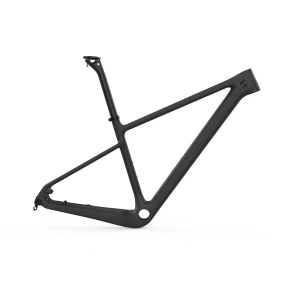
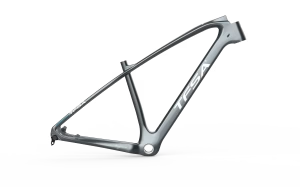
A hardtail MTB frame has a suspension fork at the front but no rear suspension system. The rear wheel is connected directly to the frame through the rear triangle. Because there are fewer moving parts, the frame can be lighter, simpler, and easier to maintain.
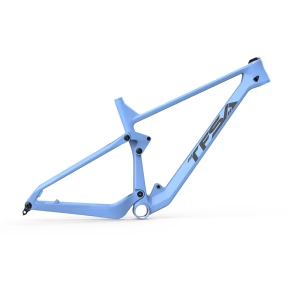
A full suspension MTB frame uses both front and rear suspension. The rear wheel moves through a controlled suspension system using components such as a rear shock, linkage, pivots, and a specially designed rear triangle.
With a carbon frame, these two designs can be engineered with different priorities. A carbon hardtail often focuses on low weight, efficient power transfer, and direct handling. A carbon full suspension frame generally prioritizes traction, impact control, stability, and rider comfort on technical terrain.
Neither design is universally superior. They are optimized for different riding conditions.
A carbon hardtail is particularly attractive to riders who value simplicity and pedaling efficiency.
Because there is no rear shock or suspension linkage, the frame structure is relatively straightforward. This allows manufacturers to optimize the carbon layup around stiffness, weight, and compliance without having to accommodate a complex rear suspension system.
One of the biggest reasons riders choose a carbon hardtail is weight.
Removing the rear shock, linkage components, additional bearings, and associated hardware can reduce the overall bike weight. A lightweight setup can be particularly valuable for cross-country riding, long climbs, and races where acceleration matters.
The actual weight difference depends on the frame design and complete bike specification, but the structural simplicity of a hardtail provides manufacturers with more opportunities to build a lightweight package.
On smooth or moderately rough terrain, a hardtail can feel extremely responsive when the rider applies power.
There is no rear suspension movement absorbing pedal input, so the connection between the rider, crankset, rear triangle, and rear wheel is direct. This can make hardtails feel fast and efficient during seated climbing, sprinting, and riding on smoother trails.
For cross-country riders who frequently encounter long climbs and relatively predictable surfaces, this efficiency can be a major advantage.
A hardtail has fewer moving components.
There is no rear shock to service and generally no rear suspension linkage requiring periodic bearing inspection or replacement. This reduces maintenance requirements and can also make the bike easier to maintain over a long period.
For riders who want a carbon MTB that is straightforward to own and operate, this simplicity can be more important than having maximum suspension performance.

A full suspension carbon MTB frame becomes more attractive as the terrain becomes rougher, steeper, and more technical.
The rear suspension allows the rear wheel to move independently over obstacles. Instead of transferring every impact directly through the rigid rear triangle, the suspension system helps keep the tire in contact with the ground.
One of the most important advantages of full suspension is improved rear-wheel traction.
When a hardtail passes over rocks, roots, and repeated bumps, the rear wheel can lose contact with the ground. The rider must absorb much of that movement through their body.
A full suspension system allows the rear wheel to follow the terrain more effectively. This can help maintain tire contact and improve traction when climbing technical sections or accelerating over uneven ground.
Full suspension can also provide greater confidence when riding quickly through rough terrain.
The suspension system absorbs and controls impacts, reducing the amount of movement transferred directly to the rider. This can make it easier to maintain a stable riding position when the trail becomes unpredictable.
For trail riding, enduro, and aggressive mountain biking, this additional control can be more valuable than the small weight penalty associated with the suspension system.
Comfort is not simply about making a ride feel softer.
Reducing repeated impacts can help limit rider fatigue, especially during long rides over rough terrain. When the bike handles more of the trail movement, the rider can spend more energy choosing lines, controlling speed, and maintaining body position.
This can make a full suspension carbon MTB particularly useful for long technical rides.
The differences become clearer when the two frame types are compared according to practical riding requirements.
| Factor | Carbon Hardtail | Carbon Full Suspension |
|---|---|---|
| Weight | Generally lower | Generally higher |
| Pedaling efficiency | Excellent on smoother terrain | Very good with a well-designed suspension system |
| Rear-wheel traction | More limited on rough terrain | Excellent |
| Technical descending | More demanding | More forgiving |
| Rider comfort | Lower on rough trails | Higher |
| Maintenance | Relatively simple | More complex |
| Suspension components | Front only | Front and rear |
| Climbing on smooth terrain | Excellent | Very good |
| Rough-trail performance | Good | Excellent |
| Long-term mechanical complexity | Lower | Higher |
| Typical use | XC, marathon, light trail | Trail, enduro, technical MTB |
These differences explain why the choice should be based on riding conditions rather than simply comparing frame weight.
For cross-country riders, a carbon hardtail MTB frame can be an excellent choice.
XC courses often include substantial climbing, rolling terrain, fast sections, and relatively smooth trails. In these conditions, low weight and efficient power transfer can provide meaningful benefits.
A hardtail also responds quickly when accelerating out of corners or climbing short, steep sections. The rigid rear triangle gives the bike a direct feel that many experienced XC riders appreciate.
However, modern XC full suspension bikes have become increasingly efficient. A lightweight carbon full suspension frame can provide efficient pedaling while offering additional traction and control on technical sections.
For competitive XC racing, the decision may therefore come down to course characteristics. A smoother course may favor a hardtail, while a technical course with repeated descents and rough sections may favor full suspension.
For trail and enduro riding, a full suspension carbon MTB frame is usually the more suitable option.
These disciplines place greater demands on suspension performance, tire contact, descending control, and impact absorption.
When the trail contains large rocks, roots, drops, steep descents, and repeated impacts, rear suspension can significantly change how the bike behaves. Instead of forcing the rider to absorb every movement, the suspension system helps the rear wheel track the terrain.
This can improve confidence and reduce fatigue during demanding rides.
A hardtail can certainly be used on technical trails, and some riders deliberately choose one because it requires more precise line selection and riding technique. But if the main objective is maximum control and speed on rough terrain, full suspension has a clear functional advantage.
Carbon fiber is important in both frame designs, but it does not eliminate the fundamental differences between hardtail and full suspension bikes.
The major advantage of carbon is that manufacturers can control stiffness and compliance through fiber orientation, laminate structure, tube shape, and material distribution.
A carbon hardtail can therefore be designed to remain stiff around the bottom bracket and head tube while allowing carefully controlled vertical compliance in other areas.
On a full suspension frame, carbon construction can be used to create a strong and lightweight main frame while accommodating suspension forces around the shock mounts, pivot areas, and rear triangle.
The result is that two carbon frames with similar weights can have very different ride characteristics.
For this reason, buyers should look beyond the phrase “carbon frame” and evaluate the actual engineering, geometry, layup quality, and intended riding category.

Suspension design is only one part of MTB performance.
Geometry has a major influence on how a bike handles.
Head tube angle, seat tube angle, reach, wheelbase, chainstay length, bottom bracket height, and frame size all affect stability, climbing position, cornering behavior, and weight distribution.
For example, a more aggressive trail-oriented geometry can provide greater stability on steep descents, while a cross-country geometry may prioritize efficient climbing and responsive handling.
This means that comparing a lightweight XC hardtail with an aggressive enduro full suspension bike purely by frame material would not provide a meaningful comparison.
The frame should be evaluated as a complete design system.
For marathon-style riding and long-distance MTB adventures, the decision becomes more personal.
A hardtail can be attractive because of its lower weight, simple maintenance, and efficient climbing performance. On smoother routes, these characteristics can make long-distance riding enjoyable and efficient.
However, if the route contains many hours of rough terrain, full suspension can reduce the physical punishment transferred to the rider.
The key question is therefore not simply “Which frame is lighter?” but “Where will most of the riding take place?”
If most of the distance consists of smooth gravel, forest roads, and moderate singletrack, a carbon hardtail may be the better fit.
If the route includes extended technical descents and rough singletrack, a full suspension carbon frame may provide a better overall riding experience.
Maintenance is another important difference.
A hardtail has a relatively simple frame structure. Apart from the front fork and standard bicycle components, there are few suspension-specific parts to maintain.
A full suspension bike introduces additional components, including:
These components are not necessarily a disadvantage. They are part of the performance system that makes full suspension effective. However, they do add mechanical complexity and long-term maintenance requirements.
For riders who prefer a simple bike that can be easily maintained, a carbon hardtail may be more appealing.
For riders who prioritize technical performance, the additional maintenance of a full suspension system may be well worth it.
The decision can be simplified by looking at your riding priorities.
Choose a carbon hardtail MTB frame if you primarily care about:
Choose a full suspension carbon MTB frame if your priorities include:
There is also a middle ground. Some riders use a hardtail for training and cross-country riding while keeping a full suspension bike for more technical terrain. The best option ultimately depends on how and where the bike will be used.
For bicycle brands and OEM buyers, the decision involves more than rider preference.
A manufacturer selecting a carbon MTB frame platform should consider the intended market, target geometry, suspension travel, frame weight, production requirements, and expected riding conditions.
Carbon layup design is particularly important because the frame needs to withstand repeated loads without adding unnecessary material. Areas around the head tube, bottom bracket, seat tube, suspension mounts, and pivot locations require careful engineering.
For a full suspension frame, suspension kinematics and structural stiffness must also work together. The frame needs to handle the forces generated by the rear shock and linkage while maintaining reliable alignment and durability.
For a hardtail, the focus shifts toward balancing lateral stiffness, impact resistance, and controlled compliance.
Working with an experienced carbon MTB frame manufacturer can therefore be important when developing a frame for a specific market or riding category.
There is no universal winner in the hardtail vs full suspension carbon MTB frame comparison.
A carbon hardtail is lightweight, efficient, mechanically simple, and highly effective for XC and smoother trail environments. It provides a direct riding feel and can be an excellent option for riders who prioritize climbing efficiency and simplicity.
A carbon full suspension frame offers a different set of advantages. Its ability to maintain rear-wheel traction, absorb repeated impacts, and improve control on rough terrain makes it better suited to technical trail riding, aggressive descending, and enduro applications.
The most important consideration is therefore not whether hardtail or full suspension is inherently better. It is whether the frame design matches the terrain, riding style, and performance goals.
For riders who spend most of their time climbing and covering relatively smooth trails, a lightweight carbon hardtail may be the smarter choice. For those who regularly ride rough, technical terrain and want maximum control and comfort, a full suspension carbon MTB frame is likely to deliver greater performance.


