




















Newer
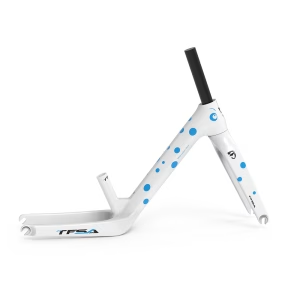
What Should Brands Consider When Customizing a Balance Bike Frame?
Choosing a carbon gravel bike frame requires a clear understanding of product requirements, intended riding conditions, and manufacturing capabilities. For bicycle brands and procurement teams, the challenge is to select a frame that fits the target market while keeping product development, component integration, and production planning manageable.
A structured sourcing process helps buyers compare frame platforms, define customization requirements, and establish practical criteria for supplier evaluation. Understanding these factors before placing an order can reduce compatibility issues and make product development more predictable.
Carbon fiber grade is one factor in frame development, but it does not determine overall performance on its own. Fiber orientation, laminate thickness, resin distribution, and frame geometry also influence structural behavior and weight.
The carbon gravel frame JH37 uses T800 carbon fiber. Buyers should evaluate the material alongside the frame design and available engineering documentation rather than assuming that a particular carbon grade guarantees fatigue resistance, impact strength, or service life.

Consistent manufacturing helps ensure that frames meet the agreed specifications across production batches. Material handling, fiber placement, molding, curing, and dimensional inspection all contribute to the finished product.
During supplier evaluation, buyers should ask how production processes are controlled, whether material batches can be traced, and what inspection records are available. These details help establish whether a manufacturer can maintain consistent quality during repeat orders.
Frame geometry affects rider fit, handling, and overall riding position. Buyers should review the available frame sizes, stack, reach, and intended rider profile before selecting a platform for a particular market.
Tire clearance also requires careful review because compatibility depends on the frame design, tire dimensions, rim width, and wheel configuration. Published compatibility information should be confirmed for the specific frame size and intended build.
Component compatibility affects assembly efficiency and the range of complete bicycles a brand can develop from one frame platform. Buyers should verify the bottom bracket standard, brake interface, shifting system, and cable routing before approving a design.
The published JH37 specifications include T800 carbon fiber, four frame sizes of 47 cm, 50 cm, 53 cm, and 56 cm, and a frame weight of 850 g for the 50 cm size before painting. The frame features a T47 threaded bottom bracket with a 48 mm diameter and an 86 mm shell length. It supports Di2 and mechanical shifting systems, fully internal cable routing, and disc brakes. The published wheel and tire options are 700C with 40C tires and 650B with 1.95 inch tires. Buyers should confirm these details against the latest technical documentation before finalizing an order.
Wheel and tire configurations should match the intended riding conditions and the product positioning of the bicycle brand. A larger wheel with a narrower tire and a smaller wheel with a wider tire can serve different design priorities, but neither configuration should be selected without checking frame clearance and component compatibility.
| Configuration | Main considerations | Product planning focus |
| 700C with 40C tires | Tire clearance, wheel compatibility, and handling requirements | General gravel and mixed surface riding |
| 650B with 1.95 inch tires | Frame clearance, tire dimensions, and geometry | Builds using a smaller wheel with a wider tire |
| Multiple approved configurations | Compatibility across the frame, fork, wheels, and components | A product range serving different rider preferences |
These are general planning considerations rather than guarantees of suitability for every frame size. Buyers should confirm approved wheel and tire combinations with the manufacturer before publishing product specifications or placing a production order.
A clear product brief helps align frame development with the brand’s target market. It should define the intended rider, frame geometry, component standards, weight objectives, and expected retail positioning.
Buyers should also clarify whether an existing frame platform can meet their requirements or whether design changes are necessary. Changes to geometry, interfaces, or structural design may affect tooling, validation, development costs, and production schedules.
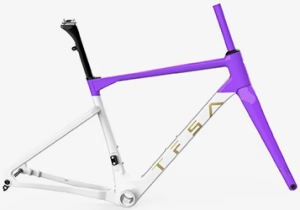
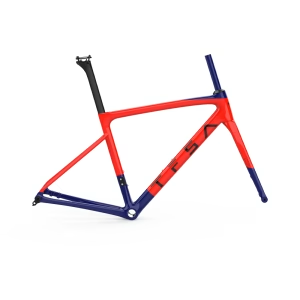
Customization may include paint colors, logo placement, graphics, surface finishes, and private label branding. Before confirming an order, buyers should establish which options are available, whether additional tooling is required, and how customization affects minimum order quantities and sample costs.
Reviewing the manufacturer’s custom carbon frame solutions can help buyers understand the available service scope and identify requirements that need further technical discussion.

Sample approval provides an opportunity to verify that the proposed frame meets the agreed requirements before mass production begins. Buyers should check frame geometry, component interfaces, approved wheel and tire configurations, paint quality, graphics, and branding placement.
Applicable inspection records and structural test reports should also be reviewed where relevant. The final approved specifications, acceptance criteria, and any outstanding changes should be documented before authorizing production.
A supplier evaluation should examine material traceability, layup controls, molding processes, dimensional inspection, surface finishing, and final quality checks. The goal is to understand how the manufacturer controls quality throughout production rather than relying only on a product sample.
Buyers can review the manufacturer’s company profile as an initial step, then request supporting documentation and discuss relevant capabilities directly. Manufacturing claims should be assessed against the actual requirements of the proposed frame and order.

The purchase price is only one part of the total procurement cost. Tooling, customization, sample development, inspection, packaging, shipping, and possible assembly rework can all affect the final budget.
For a meaningful comparison, buyers should request quotations based on the same specifications, order quantity, finish, and inspection requirements. Minimum order quantities, sample charges, payment terms, lead times, and design change procedures should also be clarified before placing an order.
Custom carbon frame pricing depends on material selection, design requirements, tooling, finish options, order volume, and inspection requirements. Customizing an existing frame with new graphics may involve different costs from developing a new design that requires additional tooling. Buyers should provide clear specifications and estimated order quantities when requesting a quotation.
Buyers should review applicable structural test reports, inspection documentation, and information about the manufacturer’s quality control procedures. Carbon fiber grade alone cannot establish a frame’s fatigue resistance, impact performance, or service life. Any performance claims should be supported by relevant evidence.
A frame may support different builds if the manufacturer confirms compatibility across the required wheel and tire dimensions, brake interface, bottom bracket standard, shifting system, and cable routing. Buyers should obtain written confirmation of the approved configurations before including them in a product catalog or sales documentation.
Choosing a suitable carbon gravel bike frame requires a balance of technical compatibility, manufacturing quality, customization options, and procurement costs. Confirm the specifications, review quality control documentation, and establish clear sample approval criteria before committing to production.
To discuss frame requirements, private label options, or a production quotation, contact the TFSA team.


