




















Newer
Carbon Fiber Frames Buying Guide for OEM and Bicycle Brands
Choosing a carbon fiber frame is no longer just about selecting the lightest option on the market. As cycling continues to evolve, riders expect bikes that are tailored to specific disciplines, whether it’s high-speed road racing, long-distance gravel adventures, or technical mountain trails. For bicycle brands and OEM buyers, this means a frame must deliver the right combination of performance, durability, comfort, and manufacturing quality rather than simply meeting a target weight.
The challenge is that many carbon frames may look similar on paper. Two products can share nearly identical specifications while offering completely different ride characteristics because of differences in frame geometry, carbon layup, molding technology, and engineering philosophy. Understanding these factors is essential for developing bicycles that meet customer expectations and remain competitive in today’s market.
One of the biggest mistakes buyers make is comparing carbon fiber grades before deciding how the bicycle will actually be used. In reality, the riding discipline should always guide the frame selection process, because every design decision—from geometry to tube shaping—is influenced by the conditions the bike is expected to handle.
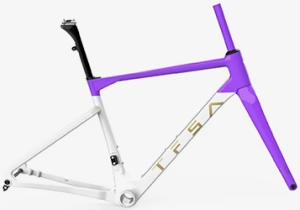
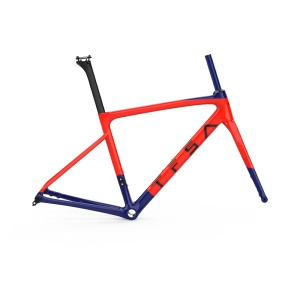
A road bike frame is built around efficiency. Riders spend most of their time on smooth pavement where rapid acceleration, climbing performance, and aerodynamic efficiency matter most. As a result, road frames typically feature a more aggressive riding position, shorter rear triangles, and higher bottom bracket stiffness to maximize power transfer. Lightweight construction is important, but it should never come at the expense of predictable handling or structural reliability. For endurance-oriented road bikes, manufacturers often introduce additional compliance into the rear triangle or seat tube to reduce fatigue during long rides without sacrificing efficiency.
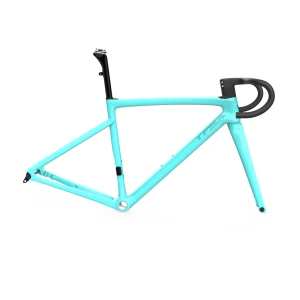
Gravel bikes represent a different philosophy. Rather than optimizing for speed alone, they must remain stable across asphalt, gravel roads, forest paths, and light trails. This requires a more relaxed geometry, a longer wheelbase, wider tire clearance, and greater vibration absorption. Riders increasingly expect one bike to perform well in multiple environments, so versatility has become just as important as outright performance. Features such as extra mounting points for bags and accessories, compatibility with multiple wheel sizes, and clearance for wider tires make gravel frames attractive to both recreational riders and adventure cyclists.
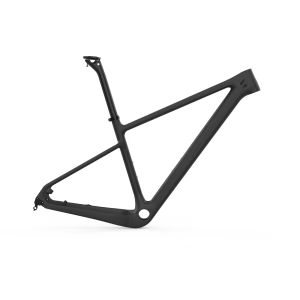
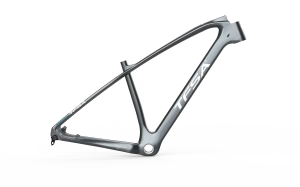
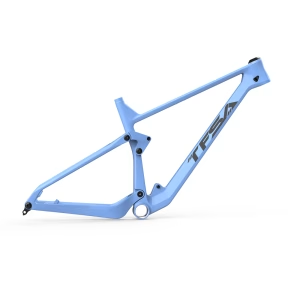
Mountain bike frames face the most demanding conditions of all. Constant impacts, drops, twisting forces, and uneven terrain place enormous stress on the frame. Whether designed for cross-country racing, trail riding, enduro, or downhill applications, MTB frames require reinforced structures, carefully engineered stress distribution, and optimized suspension integration. While weight still matters, durability, stiffness, and rider control are generally given much higher priority. An ultra-light frame may appeal on a specification sheet, but it offers little value if it cannot withstand years of aggressive riding.
For bicycle brands, identifying the target rider before discussing carbon grade or component compatibility leads to better product development decisions. The frame should always be engineered around riding experience rather than marketing specifications.

Many product descriptions proudly advertise materials such as Toray T700 or T800 carbon fiber, leading some buyers to believe that higher-grade carbon automatically results in a better bicycle. In practice, the performance of a carbon frame depends on the complete engineering process rather than the material designation alone.
Carbon fiber is unique because its properties can be adjusted by changing the orientation, thickness, and placement of each layer. Engineers may add reinforcement around the head tube and bottom bracket to improve pedaling efficiency while allowing controlled flexibility in the seat stays to absorb road vibration. The goal is to distribute stiffness only where it benefits performance instead of making the entire frame uniformly rigid.
Resin systems also play an important role. High-quality resin improves bonding between fibers, reduces the likelihood of internal voids, and enhances fatigue resistance over years of riding. Combined with accurate layup schedules and precision molding, the resin contributes significantly to the frame’s long-term durability.
Weight should also be viewed in context. Chasing the lowest possible frame weight can sometimes reduce impact resistance or shorten service life if too much material is removed. A racing frame intended for professional competition has very different design priorities from a gravel bike built for bikepacking or a trail bike expected to absorb repeated impacts. Instead of asking which frame is lightest, buyers should ask whether the frame achieves the right balance between stiffness, comfort, strength, and reliability for its intended application.
This balanced approach ultimately delivers a better riding experience than focusing on a single specification.
Even when two frames use similar carbon materials, they can feel completely different on the road or trail because of geometry. This is often the factor riders notice first, although it receives less attention than frame weight or carbon grade.
Frame geometry determines riding position, steering response, climbing efficiency, and overall confidence. A race-oriented road bike typically places the rider in a lower, more aerodynamic position with sharper steering characteristics, allowing quick acceleration and responsive handling. Gravel bikes generally increase stack height, lengthen the wheelbase, and relax the head tube angle to improve stability on loose terrain. Mountain bikes continue this trend even further, creating a confident riding position capable of handling steep descents and technical obstacles.
Tube design also contributes to overall ride quality. Modern carbon manufacturing allows engineers to shape tubes in ways that are impossible with traditional metal frames. Aerodynamic profiles reduce drag on road bikes, while reinforced junctions improve strength in high-load areas without adding unnecessary weight. Every curve and transition serves a structural purpose rather than simply creating an attractive appearance.
Another increasingly important consideration is compatibility. Cycling technology changes rapidly, and a frame that cannot accommodate modern components may quickly become outdated. Buyers should evaluate compatibility with electronic and mechanical drivetrains, internal cable routing, hydraulic disc brakes, thru-axles, integrated cockpits, dropper posts where appropriate, and current bottom bracket standards. Tire clearance deserves particular attention, as wider tires have become common across nearly every cycling discipline. Sufficient clearance not only improves versatility today but also extends the commercial lifespan of the product as market preferences continue to evolve.
Rather than viewing these features individually, successful manufacturers design them as an integrated system that improves both performance and future usability.
The quality of a carbon frame is determined long before it reaches the painting line. Every manufacturing stage influences its strength, consistency, and ride characteristics, making production capability just as important as engineering design.
Precision mold development ensures accurate dimensions and consistent alignment throughout production. During layup, experienced technicians must position every carbon sheet exactly according to the engineering specification, since even small deviations can affect stiffness or create stress concentrations. High-pressure molding helps eliminate wrinkles and trapped air, while carefully controlled curing temperatures ensure proper resin distribution and structural integrity.
Once molding is complete, thorough inspection becomes equally important. Professional manufacturers conduct dimensional verification, alignment checks, and detailed visual inspections before moving to fatigue and impact testing. These quality control procedures help identify defects before frames reach customers and contribute to greater consistency across production batches.
For OEM buyers, evaluating a supplier’s manufacturing system often provides more valuable insight than comparing catalog specifications alone. A factory capable of maintaining consistent quality over thousands of frames is far more valuable than one capable of producing an exceptionally light prototype that cannot be replicated reliably in mass production.
This is one reason many international bicycle brands prefer working with experienced carbon frame specialists throughout the product development process. Beyond manufacturing, these partners can assist with geometry optimization, mold development, prototype refinement, finishing options, and production planning, reducing both development time and commercial risk.
As a professional carbon bicycle frame manufacturer, TFSA has built its capabilities around this complete development process. From carbon engineering and mold design to OEM and ODM production, painting, quality inspection, and final assembly support, the company works closely with bicycle brands worldwide to develop road, gravel, and mountain bike frames that combine lightweight construction with dependable long-term performance. By emphasizing engineering consistency rather than simply pursuing lower weight, TFSA helps customers launch products that meet the expectations of both professional riders and everyday cycling enthusiasts.

There is no universal carbon fiber frame that suits every rider or every bicycle brand. The best choice is always the one that aligns with the intended riding discipline, target market, and long-term product strategy.
A performance-focused road bike should prioritize efficient power transfer, responsive handling, and aerodynamic integration. A gravel bike needs to balance comfort, stability, and versatility across changing terrain, while a mountain bike must inspire confidence through structural strength and predictable control. Achieving these goals requires far more than selecting a particular carbon fiber grade—it demands thoughtful engineering, optimized geometry, precision manufacturing, and rigorous quality control working together.
For OEM buyers, supplier selection is equally important. A manufacturer with strong engineering expertise, stable production capabilities, and comprehensive testing procedures can contribute significantly to the success of an entire bicycle program, helping brands reduce development risks while maintaining consistent product quality.
Ultimately, choosing the right carbon fiber frame is about creating the best overall riding experience. When material selection, frame design, manufacturing precision, and real-world performance are considered as a complete system rather than isolated specifications, bicycle brands are better positioned to deliver products that stand out in an increasingly competitive global market.


