A kids carbon bike frame needs to be developed around the rider and intended use rather than simply scaled down from an adult frame. Age, riding needs, and bicycle configuration can all change the frame requirements.
For brands developing children’s bikes, customization begins with defining these requirements and translating them into the right frame design.
The sections below examine how different riding stages and applications shape the development of kids carbon bike frames.
How Are Kids Carbon Bike Frames Different by Age?
Balance Bike Frames for Younger Children
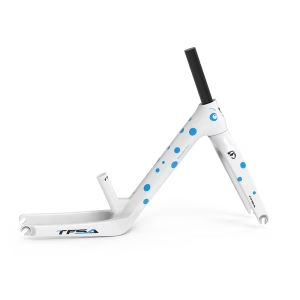
Younger riders need a frame that is easy to control and appropriate for a simple balance bike configuration. Wheel size and overall frame weight become important considerations because the bicycle needs to remain manageable for a smaller rider.
TFSA’s JH-29 is designed for children under five years old. It uses Dongli T800 carbon fiber, supports wheelsets up to 12 inches, and has a frame weight of 660g ±20g. The frame uses an integrated carbon fiber construction suited to its intended children’s application.
Youth MTB Frames for Older Riders
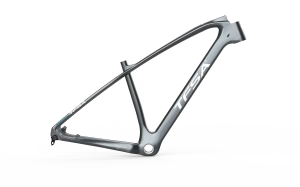
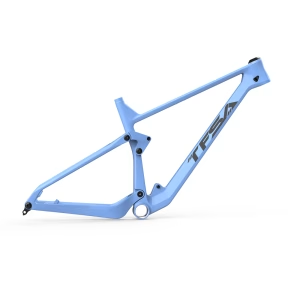
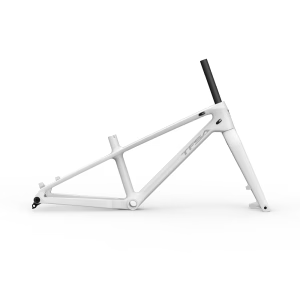
Older children who ride off road need a more advanced frame configuration. Suspension compatibility, tire clearance, braking systems, drivetrain requirements, and cable routing all become part of the frame specification.
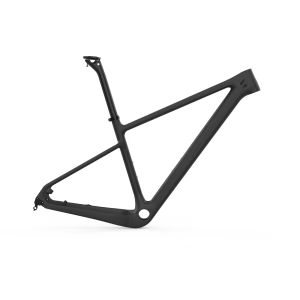
TFSA’s JH-58 is designed for children aged 7 to 15. It uses T800 carbon fiber and has a frame weight of 600g ±20g. The frame supports 24 × 2.1 wheels, 100mm fork travel, disc brakes, and a BSA-68mm bottom bracket. It also supports internal or external cable routing and a single chainring up to 36T.
The
youth carbon MTB bike frame provides a clear example of how frame specifications change when the intended riding application becomes more demanding.
Frame Weight and Carbon Material Selection
Material selection needs to work together with the intended frame configuration. The two children’s frame examples use T800 carbon fiber, but their wheel sizes, frame weights, and riding applications are different.
| Frame |
Material |
Frame Weight |
Wheel Configuration |
Intended Rider |
| JH-29 |
T800 carbon fiber |
660g ±20g |
Up to 12 inches |
Under 5 years |
| JH-58 |
T800 carbon fiber |
600g ±20g |
24 × 2.1 |
7 to 15 years |
These differences show why a kids carbon bike frame should be developed according to its intended application rather than treated as one universal platform.
How Are Kids Carbon Bike Frames Customized for Riding Needs?
Wheel Size and Frame Configuration
Wheel size is one of the basic specifications that separates different children’s frame platforms. A balance bike using a 12 inch wheel configuration has different structural and component requirements from a youth MTB using 24 × 2.1 wheels.
For a custom frame project, the required wheel size should therefore be established before the frame design is finalized. This provides a basis for developing the frame dimensions and checking compatibility with the intended bicycle components.
MTB Compatibility for Off Road Riding
A youth MTB frame needs to accommodate the components required for off road use. The JH-58 supports a 100mm fork travel configuration, disc brakes, 24 × 2.1 wheels, and a single chainring with a maximum 36T specification.
These requirements need to be considered together during frame development. Fork, wheel, brake, drivetrain, and bottom bracket specifications all affect the final frame configuration.
Cable Routing and Component Compatibility
Cable routing is another detail that needs to be established during development. The JH-58 supports both internal and external cable routing and uses a BSA-68mm bottom bracket.
Defining these requirements before production helps ensure that the frame is compatible with the intended components. This is particularly important when a brand is developing a new frame rather than selecting an existing standard model.
How Does Manufacturing Quality Affect Kids Carbon Bike Frames?
Material Preparation and Frame Forming
Carbon frame production starts with material preparation and continues through pre shaping, carbon cloth application, forming, and bonding. These stages establish the basic structure of the frame before testing and surface finishing.
For a custom children’s frame, consistent processing is important because changes in material placement or forming can affect the finished product.
Testing and Inspection
Testing is included in the manufacturing process described for both the JH-29 and JH-58.
The broader TFSA carbon frame manufacturing process also includes structure inspection, alignment checks, testing, packing, and shipment preparation.
These controls help connect the approved frame specification with the production model.
Production Consistency Across Frame Models
A children’s bicycle range may contain several frame platforms for different riding stages. Maintaining consistency requires control over material preparation, molding, finishing, inspection, and final packing.
TFSA describes an integrated production process covering carbon fiber processing, frame molding, painting, assembly inspection, and final packing. It also supports sample testing, small batch orders, and regular mass production.
This production structure can be useful when a brand needs to develop and manufacture more than one children’s carbon frame specification.
How Does Custom Carbon Frame Development Work?
Frame Design and Model Development
A custom children’s frame project begins with the required product specification. The development brief can include rider age, wheel size, riding application, component requirements, target weight, and finishing requirements.
Once these requirements are defined, the frame can move through design, material preparation, molding, structural processing, testing, and finishing. This approach allows the frame to be developed around the intended bicycle rather than modified after production has already begun.
Painting Logo and Branding Options
Customization can also extend to the appearance of the finished frame. For brands developing a children’s bicycle range, consistent branding can be important across different frame models.
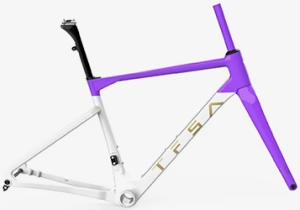
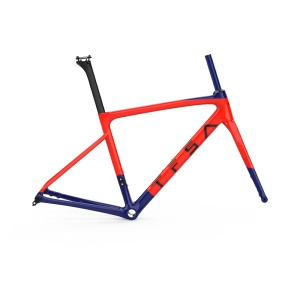
TFSA’s carbon bicycle frame services include custom painting, logo, and branding options alongside frame development and production coordination.
For brands looking for
custom carbon bike frames, these options allow the structural specification and product appearance to be developed as part of the same project.
Carbon Layup and Frame Manufacturing
Material preparation and forming are closely connected with the final frame structure. TFSA’s product information describes processes including carbon cloth cutting, pre shaping, forming, bonding, testing, polishing, painting, and coating.
Keeping these stages within a controlled production process helps ensure that the finished frame follows the approved specifications.
FAQ
What affects the price of a kids carbon bike frame?
The cost depends on factors such as frame design, carbon material, tooling, production quantity, finishing requirements, and customization. A new frame development project may require different resources from an existing frame platform.
What frame options are available for different age groups?
TFSA currently offers different children’s frame configurations for different riding stages. The JH-29 is designed for children under five with a 12 inch wheel configuration, while the JH-58 is designed for riders aged 7 to 15 with a 24 × 2.1 MTB configuration.
Can kids carbon bike frames be customized?
Yes. Customization can cover frame development as well as painting, logos, and branding. TFSA also describes model based project development and production coordination as part of its carbon frame capabilities.
Conclusion
Kids carbon bike frames should be developed around the intended rider, riding application, and component configuration. Defining these requirements early helps brands move from frame design to consistent production.
For custom children’s carbon frame development,
contact the TFSA team to discuss your requirements and request a quotation.